 HAPPY
HAPPYAswan, Nubia and Abu Simbel Travel Guide: Philae, Felucca Rides and a 3-Day Plan
Updated October 2026 · The HAPPYDAYS team
Aswan is the calmest city on the Egyptian Nile. The river runs past granite boulders and green islands, white-sailed feluccas glide by, and on the West Bank the colourful houses of Nubian villages sit against the desert dunes. It is also your base for one of the great sights of the world: the temples of Abu Simbel. This guide covers what to see, how to get there, when to go and a simple 2–3 day plan.
In short:
- Time: 2 days minimum, 3 days to enjoy it without rushing.
- Getting there: about 1 h 30 by plane from Cairo, about 3 hours by train from Luxor, or a Nile cruise of about 3 nights from Luxor.
- Abu Simbel: about 280 km south, 3–4 hours each way by road, with very early departures.
- Best season: October to April. Summers are very hot.
- Tickets and hours: they change, so check the official site (egymonuments.gov.eg) before you go.
Philae Temple
The Temple of Isis at Philae is one of the most beautiful temples in Egypt, and the way you reach it is part of the charm: a short motorboat ride across the water. The temple did not always stand here. As the dams rose and the original island flooded, an international UNESCO campaign took the temple apart and rebuilt it, block by block, on the higher island of Agilkia in the 1970s. Today it is part of the World Heritage site “Nubian Monuments from Abu Simbel to Philae”. Go early in the morning for softer light and fewer groups.
A felucca at sunset
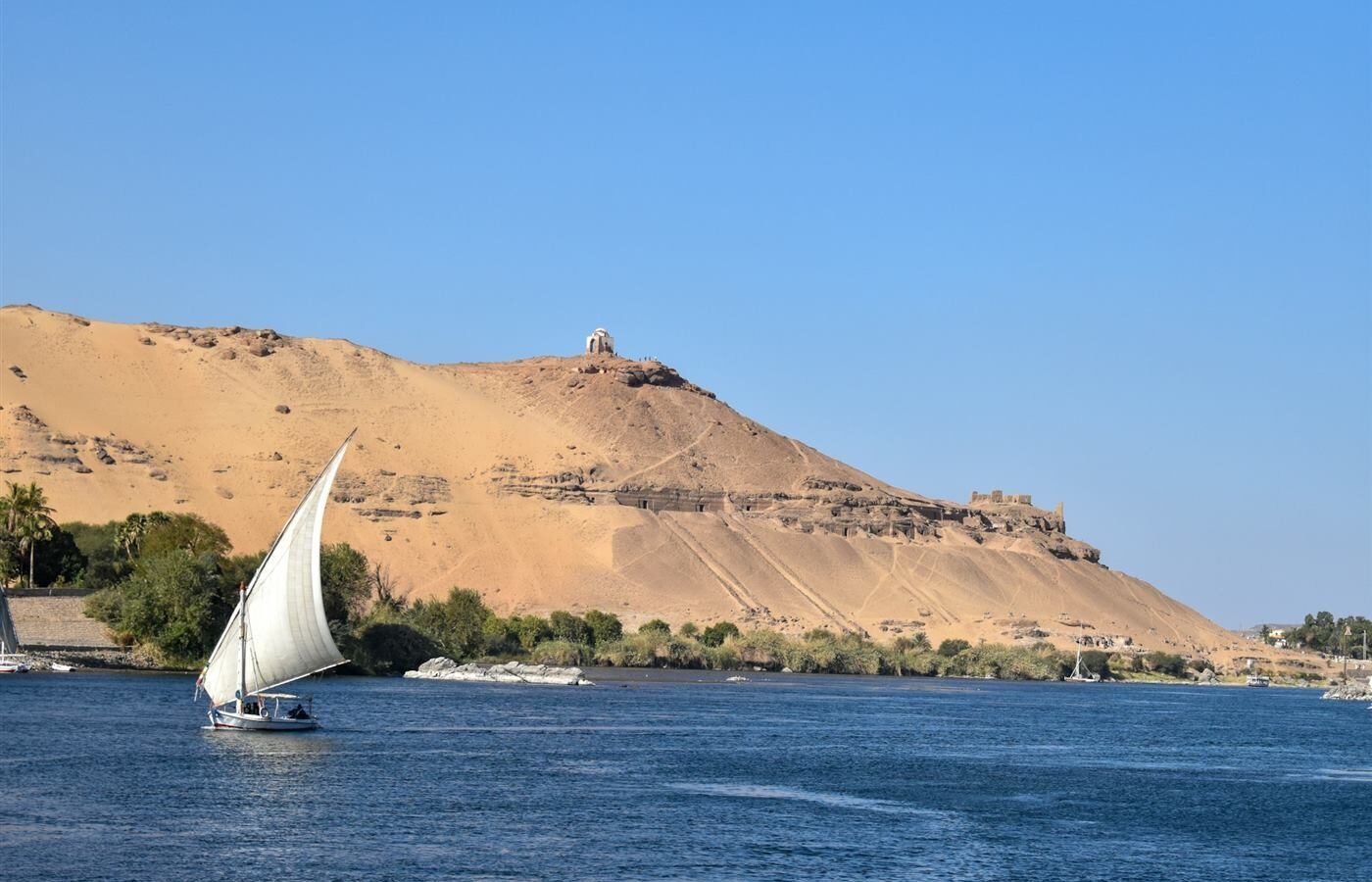
No visit to Aswan is complete without a felucca, the traditional wooden sailing boat. An hour or two on the water around the islands, as the sun sets behind the dunes and the tombs on the West Bank, is the most relaxing thing you can do here. Agree on the duration and the route with the boatman before you set off.
Elephantine Island
Right in the middle of the river, opposite the Corniche, Elephantine is one of the oldest inhabited places in Aswan. At its southern end you will find the ruins of ancient Abu, with the partly reconstructed Temple of Khnum, the god of the flood, and a Nilometer that was used to measure the level of the Nile. The island also has small Nubian villages with narrow lanes. Public ferries and private boats cross from the Corniche.
Gharb Soheil, the Nubian village
On the West Bank, a little north of the old Aswan Dam, Gharb Soheil is famous for its houses painted in bright blue, yellow and pink, its domed roofs and its markets of spices and handicrafts. You can get there by boat on the Nile or by road. Some houses welcome visitors for tea, and you will often be offered Nubian food and henna.
The Nubian Museum
Opened in 1997, the Nubian Museum tells the story of Nubia from prehistory to the present day, including the international campaign that saved the monuments from the waters of Lake Nasser. Its building, inspired by Nubian architecture, received the Aga Khan Award for Architecture. It is the best place to understand everything else you will see in Aswan, so visit it early in your stay.
The Unfinished Obelisk
In the ancient granite quarries of Aswan lies an obelisk about 42 metres long, abandoned after a crack appeared in the stone. Had it been finished, it would have been the largest obelisk ever made in ancient Egypt. It is thought to date from the time of Queen Hatshepsut. You can still see the marks left by the ancient workers, which reveal how these giant blocks were cut.
The High Dam and Lake Nasser
South of the city, the High Dam, completed in 1970, transformed modern Egypt: it controls the Nile flood and produces electricity. Behind it stretches Lake Nasser, one of the largest artificial lakes in the world. It was the rising of this lake that made it necessary to move Abu Simbel and Philae. A stop on the dam offers wide views over the lake on one side and the river on the other.
Kitchener’s Island (the Botanical Garden)
This small island, reached by boat, was given to Lord Kitchener at the end of the 19th century, and he turned it into a garden of exotic plants and trees. Today it is the Aswan Botanical Garden: a shaded, quiet walk among palms and tropical trees, easy to combine with a felucca trip.
Abu Simbel
About 280 km south of Aswan, near the Sudanese border, stand the two temples carved into the rock by Ramses II: the Great Temple, with its four colossal seated statues of the pharaoh, and the Small Temple, dedicated to the goddess Hathor and Queen Nefertari. In the 1960s the whole complex was cut into blocks and reassembled higher up, out of reach of Lake Nasser.
- By road: about 3–4 hours each way. Tours leave Aswan very early, often before dawn, and return in the afternoon.
- By air: short flights from Aswan exist, but they are limited, so book well in advance.
- The sun festival: on about 22 February and 22 October, the rising sun reaches the inner sanctuary of the Great Temple and lights up the statues of the gods. These days are very crowded, so plan ahead.
Getting to Aswan
| From | Option | Approximate time |
|---|---|---|
| Cairo | Domestic flight | about 1 h 30 |
| Luxor | Train | about 3 hours |
| Luxor | Nile cruise | about 3 nights |
| Aswan → Abu Simbel | Car or tour bus | 3–4 hours each way |
Times are approximate. Schedules and fares change, so check them with the airline, the railway or your operator before booking.
When to go
The best period is from October to April, with warm, sunny days and cool evenings. From May to September temperatures are very high: if you travel in summer, visit sites at dawn, rest in the middle of the day and drink plenty of water.
Suggested 2–3 day plan
| Day | Morning | Afternoon and evening |
|---|---|---|
| 1 | Philae Temple, the Unfinished Obelisk and the High Dam | Felucca at sunset around Kitchener’s Island |
| 2 | Abu Simbel (very early departure) | Rest, then a walk along the Corniche and the souq |
| 3 | The Nubian Museum and Elephantine Island | Gharb Soheil Nubian village |
With only 2 days, keep days 1 and 2 and swap the High Dam for the Nubian village.
Where to stay in Aswan
Many hotels line the Corniche and the islands with views of the Nile, which is the classic Aswan experience. For something more local, Nubian guesthouses on the West Bank offer domed rooms, a slower pace and Nubian hospitality. In both cases, staying near the river makes it easy to reach the boats and the sights.
Frequently asked questions
How many days do you need in Aswan?
Two days for the essentials, including Abu Simbel. Three days let you add the Nubian village, the Nubian Museum and Elephantine at a calmer pace.
Is Abu Simbel worth the long trip?
Yes, it is one of the most impressive monuments in Egypt. Expect about 3–4 hours each way by road and a very early start, or look for one of the limited short flights.
When is the Abu Simbel sun festival?
On about 22 February and 22 October each year, when the rising sun lights the sanctuary of the Great Temple. It is very crowded, so book transport and accommodation early.
How do I get from Luxor to Aswan?
By train in about 3 hours, by road, or on a Nile cruise of about 3 nights that stops at the temples along the way.
Where can I find ticket prices and opening hours?
They change regularly, so check the official site of the Ministry of Tourism and Antiquities (egymonuments.gov.eg) before your visit.