 HAPPY
HAPPYDahab & St Catherine Guide: Diving, the Blue Hole and a Mount Sinai Sunrise
Updated October 2026 · The HAPPYDAYS team
Dahab is the most relaxed corner of South Sinai: a former Bedouin fishing village where cafés sit right on the water, the reef starts a few steps from the promenade and nobody is in a hurry. It is also one of the world’s best-known spots for diving and freediving, home to the famous Blue Hole. And about an hour and a half to two hours inland lies St Catherine, where you can climb Mount Sinai at night and watch the sun rise over the mountains, then visit one of the oldest monasteries in the world. This guide covers both, with a 3-day plan.
In short:
- Getting there: the nearest airport is Sharm El Sheikh, about an hour or a little more by road. Buses from Cairo take most of a day.
- Must-dos: snorkelling at the Blue Hole, the Mount Sinai sunrise hike and St Catherine’s Monastery.
- Best time: spring and autumn. Winter days are pleasant, but nights in the mountains are very cold.
- Safety: dive only with qualified guides and within your certification; hike Mount Sinai with a local guide.
Dahab: the laid-back side of the Red Sea
Dahab is small and easy to get to know. The Masbat / Lighthouse area is the heart of town: a seafront walkway lined with cafés, restaurants, dive centres and small shops, with good reef right off the shore. North of it is Assala, the more local, residential part of town, quieter and closer to everyday Bedouin and Egyptian life. To the south, the Lagoon is a wide, shallow bay with flat water, which makes it one of the classic places in Egypt to learn windsurfing and kitesurfing.
The rhythm here is slow: a morning dive, a long lunch with your feet almost in the sea, sunset over the mountains of Saudi Arabia across the Gulf of Aqaba, and an evening on the promenade.
The Blue Hole and the best dive and snorkel sites
The Blue Hole
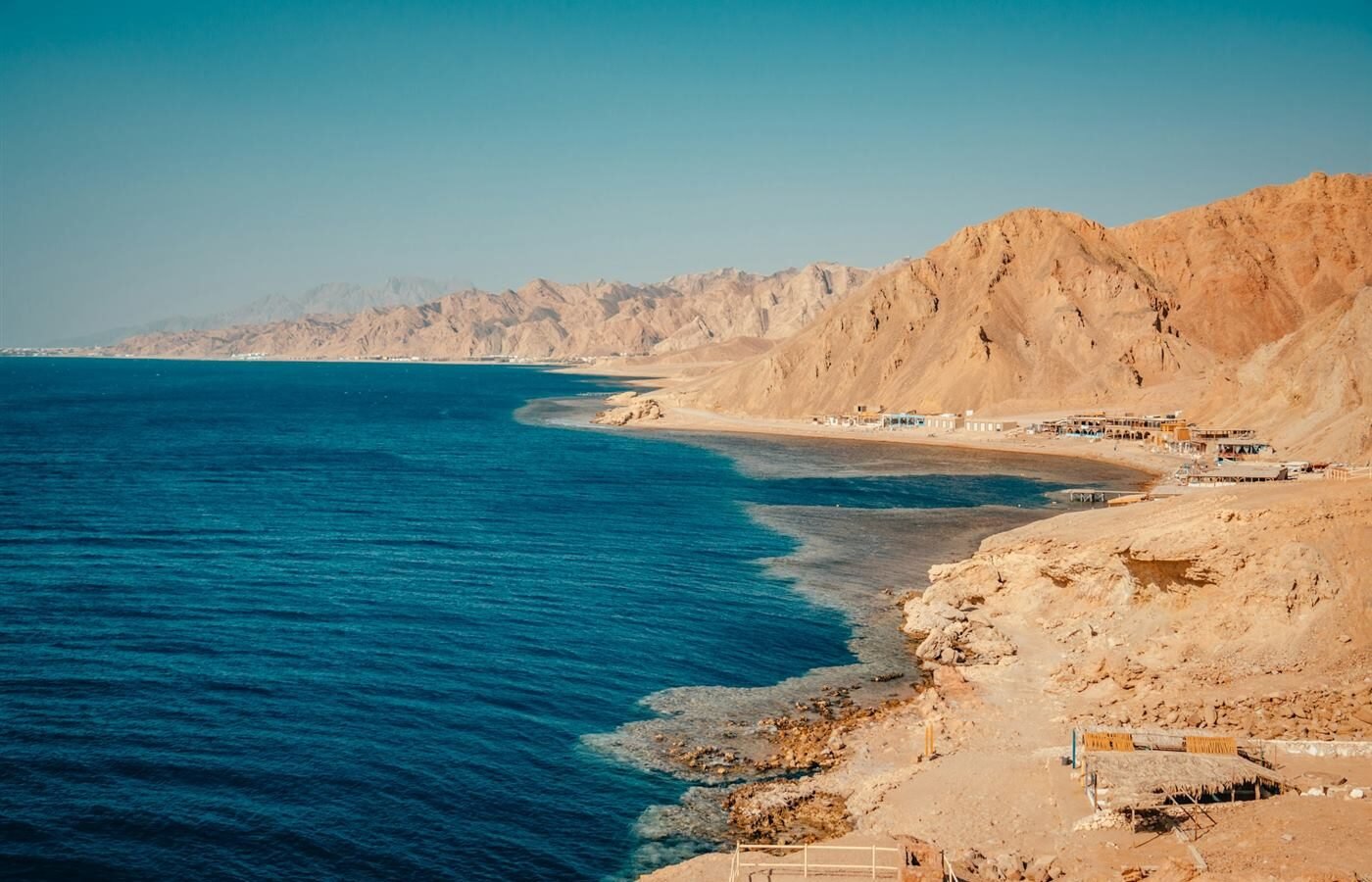
About 20–30 minutes north of town by car, the Blue Hole is a deep sinkhole in the reef just off the shore. For snorkellers it is wonderful: the edge of the hole is covered in coral and fish, and the contrast between the shallow reef and the deep blue is unforgettable.
The Blue Hole is also famous for a darker reason: over the years it has been the site of serious accidents among divers who went too deep. Its well-known arch lies beyond recreational diving limits. Dive here only with a qualified local guide, stay within your training and certification, and never let the place push you deeper than you planned.
The Bells
A short walk south of the Blue Hole. Divers enter through a narrow crack in the reef, drop down a chimney and then follow a spectacular wall back towards the Blue Hole. A classic dive for those with the right level and a guide.
Canyon
Between town and the Blue Hole, a narrow canyon in the reef, reached across a shallow lagoon. A favourite with divers; snorkellers can enjoy the reef around the entry.
Three Pools
South of town, a row of shallow natural pools inside the reef, with the reef wall just beyond them. Calm and good for light snorkelling, and quieter than the sites in the north.
Ras Abu Galum
A protected area north of the Blue Hole, where mountains meet the sea and there are no roads to the coast. It is usually reached on foot, by camel or by boat from the Blue Hole area. Expect simple Bedouin huts, untouched reefs and almost no one else around.
Freediving culture
Thanks to its deep water close to shore, Dahab has become one of the world’s best-known centres for freediving, with many schools and an international community that trains here. If you have ever wanted to try a beginner freediving course, this is one of the best places to do it, always with a certified instructor.
St Catherine: Mount Sinai at sunrise and the monastery
St Catherine is a small town high in the mountains of South Sinai, about 1.5–2 hours’ drive from Dahab.
The night hike up Mount Sinai
Mount Sinai (Jebel Musa) is the mountain where, according to tradition, Moses received the Ten Commandments. Most visitors climb at night to reach the summit for sunrise. Hikers usually start in the middle of the night, often around 2 am, and the climb takes about 2–3 hours depending on your pace. You hike with a local Bedouin guide, mostly along the wider camel path, and the final stretch is a climb up stone steps. Many people come down by the steep “Steps of Repentance” towards the monastery in daylight.
It is cold at the top before dawn, even when it is hot in Dahab, and in winter temperatures can drop close to freezing. Bring layers, a warm jacket, a hat, a torch or headlamp and good shoes.
St Catherine’s Monastery
At the foot of the mountain stands St Catherine’s Monastery, one of the oldest working Christian monasteries in the world and part of the UNESCO World Heritage Site “Saint Catherine Area”. Visiting hours are limited and it is closed on some days and religious holidays, so check before you go. Dress modestly, covering shoulders and knees.
Getting there
- By air: the nearest airport is Sharm El Sheikh, about an hour or a little more by road to Dahab.
- By bus from Cairo: there are long-distance buses to Dahab, but the journey takes most of a day, with security checkpoints along the way.
- To St Catherine: most visitors join an organised night trip from Dahab or hire a car with a driver; the drive is about 1.5–2 hours.
- Carry your passport or ID: there are several checkpoints on Sinai roads.
When to go
Spring and autumn are the best seasons: warm days, comfortable hiking and pleasant water. Summer is very hot on land, though the sea is at its best. Winter days in Dahab are sunny and mild, but nights in the mountains are cold, and the Mount Sinai summit before sunrise can be freezing.
A 3-day plan
| Day | Morning | Afternoon and evening |
|---|---|---|
| 1 | Arrive, walk the Masbat / Lighthouse promenade, snorkel off the shore | Sunset in town; book your Mount Sinai trip |
| 2 | Blue Hole and Bells: snorkelling, or a guided dive at your level | Canyon or a rest; early night, and late-night departure for St Catherine |
| 3 | Sunrise on Mount Sinai, descent and St Catherine’s Monastery | Back to Dahab, rest; easy evening at the Lagoon or Three Pools |
With an extra day, add Ras Abu Galum or a windsurf or kitesurf lesson at the Lagoon.
Where to stay in Dahab
Dahab has accommodation for every style: simple budget camps and guesthouses, dive-centre hotels on the seafront, boutique hotels and apartments for longer stays. Masbat / Lighthouse puts you in the middle of things; Assala is quieter and more local; the Lagoon area suits windsurfers, kitesurfers and families. Below are partner stays you can book in Dahab.
Frequently asked questions
Can I snorkel at the Blue Hole if I don’t dive?
Yes. Snorkelling around the edge of the Blue Hole is one of the highlights of Dahab. Stay near the reef, wear fins and watch the current and boat traffic.
Is the Blue Hole dangerous?
For snorkellers on the surface it is a popular, enjoyable site. The danger is for divers who go too deep: dive only with a qualified guide, within your certification, and never chase depth.
How hard is the Mount Sinai hike?
It is a steady climb of about 2–3 hours, done in the dark, with stone steps at the end. Anyone in reasonable health can do it at their own pace. Camels are often available on the lower part of the path.
Can I visit St Catherine as a day trip from Dahab?
Yes. The usual option is a night trip: leave Dahab late at night, hike for sunrise, visit the monastery and return in the afternoon. Check the monastery’s opening days before you book.
When is the best time to visit Dahab and St Catherine?
Spring and autumn. Summer is very hot on land, and winter nights in the mountains are cold, so bring warm layers for Mount Sinai whatever the season.