 HAPPY
HAPPYLuxor in 2 Days: East Bank, West Bank, Balloon Ride and Where to Stay
Updated October 2026 · The HAPPYDAYS team
Luxor is often called the world’s largest open-air museum, and two days is enough to see its highlights without rushing. The idea is simple: the Nile splits the city in two. On the East Bank, where the modern town is, you’ll find Karnak Temple, Luxor Temple and the Luxor Museum. On the West Bank lie the tombs and mortuary temples: the Valley of the Kings, Hatshepsut’s Temple and the Colossi of Memnon. This guide gives you one day for each bank, plus a sunrise balloon ride if you want it.
In short:
- Day 1: East Bank — Karnak in the morning, Luxor Museum in the afternoon, Luxor Temple after dark.
- Day 2: West Bank — optional balloon at sunrise, then the Valley of the Kings, Hatshepsut’s Temple and Medinet Habu.
- Getting there: about 1 h 15 by plane from Cairo, about 10 hours by sleeper train, or about 4 hours by road from Hurghada.
- Tickets and hours: they change, so check the official site (egymonuments.gov.eg) before you go.
- Best season: October to April. In summer, start as early as possible.
The 2-day plan at a glance
| Day | Time | Plan |
|---|---|---|
| 1 | Early morning | Karnak Temple (allow 2–3 hours) |
| 1 | Midday | Rest and lunch out of the sun |
| 1 | Afternoon | Luxor Museum |
| 1 | Evening | Luxor Temple lit up, and a stroll along the Avenue of Sphinxes |
| 2 | Sunrise | Hot-air balloon over the West Bank (optional) |
| 2 | Morning | Valley of the Kings |
| 2 | Late morning | Hatshepsut’s Temple at Deir el-Bahari |
| 2 | Afternoon | Medinet Habu or the Valley of the Queens, then the Colossi of Memnon on the way back |
Day 1: The East Bank
Karnak Temple
Karnak isn’t a single temple but a vast complex built and expanded over many centuries, dedicated mainly to the god Amun. Its most famous part is the Great Hypostyle Hall, a forest of giant columns covered in carvings. Get there early: the light is softer, the crowds are thinner and the heat is still bearable. Allow at least 2–3 hours, and more if you love history.
The Avenue of Sphinxes
An ancient processional road about 2.7 km long that links Karnak to Luxor Temple, lined with sphinx and ram-headed statues. After decades of excavation and restoration it reopened in November 2021 with a grand ceremony. You don’t need to walk the whole length: the stretch near Luxor Temple is beautiful at sunset and after dark.
Luxor Museum
A small, well-presented museum on the Corniche, with carefully chosen pieces from Luxor’s temples and tombs. It’s a good way to spend the hot part of the afternoon indoors, and it gives the sites you’ll see context. Check the current opening hours on the official site before you go.
Luxor Temple at night
Right in the town centre, on the Nile. You can visit it during the day, but it’s at its most magical after sunset, when the columns and statues are lit up. Leave it for the end of your first day, then walk along the Corniche.
Day 2: The West Bank
Sunrise hot-air balloon
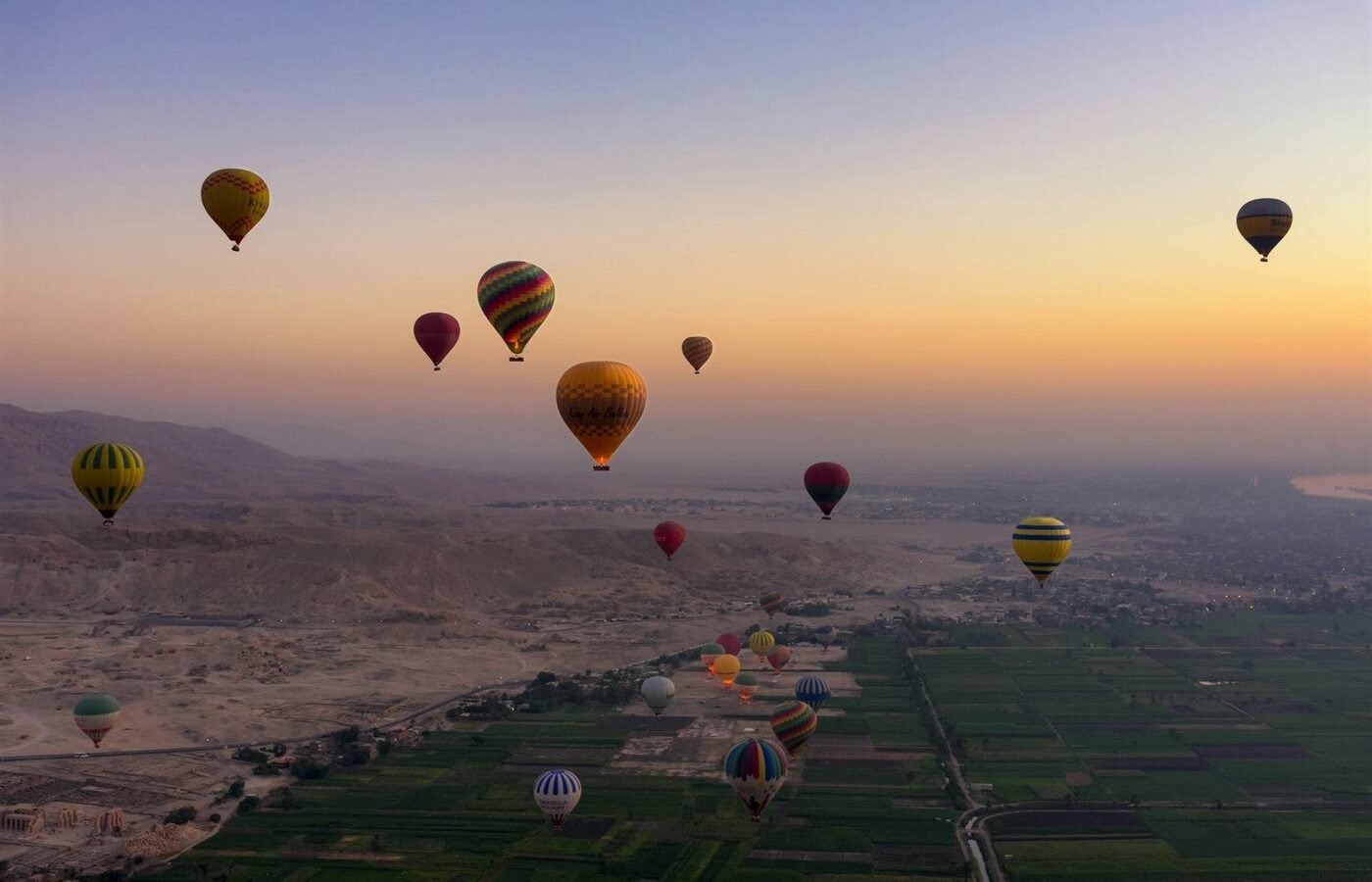
The balloons rise at dawn over the West Bank, with views of the temples, the fields and the Nile. It’s an unforgettable experience, but book only with licensed operators through a trusted agency or your accommodation, and don’t pick on price alone. Flights depend on the weather and can be cancelled at short notice because of wind, so don’t schedule it on the morning of a flight or train out of Luxor.
Valley of the Kings
The burial place of New Kingdom pharaohs, carved deep into the mountain, with corridors covered in colourful paintings. The general entry ticket includes a set number of tombs from those open on the day, and the open tombs rotate for conservation. Some famous tombs need an extra ticket, such as Tutankhamun’s, Seti I’s and the tomb of Ramesses V and VI. Check what’s included and what’s open on the official site or at the ticket office. Photography rules can also change, so ask before you use your camera.
Hatshepsut’s Temple at Deir el-Bahari
Built for Queen Hatshepsut, one of the few women to rule Egypt as pharaoh. Its terraces rise in levels against a sheer cliff face, making it one of the most striking sights in Egypt. There is little shade, so visit in the morning and bring a hat and water.
Medinet Habu
The mortuary temple of Ramesses III, and one of the best preserved on the West Bank, with deep carvings that still keep some of their original colour. It is usually quieter than the other sites, which makes it a perfect stop after the Valley of the Kings.
Valley of the Queens
Here queens, princes and princesses were buried. Its most famous tomb, Nefertari’s, needs a separate ticket and is not always open, so check its status before you plan around it. If you’re short on time, choose either the Valley of the Queens or Medinet Habu.
Colossi of Memnon
Two huge seated statues of Amenhotep III that once guarded his now-vanished temple. They stand by the main road, so stop for 15 minutes on your way in or out.
Crossing the Nile
- Public ferry: the cheapest and most local option, crossing between the East Bank and the West Bank landing. A short trip on the Nile in itself.
- Motorboat: small private boats cross whenever you like from the Corniche. Agree on the price before you board.
- The bridge: the road bridge is outside the town centre, so crossing by taxi or car means a longer detour. It’s practical if you’re taking a driver for the whole day on the West Bank.
The West Bank sites are spread out and aren’t walkable from one to the next, so once you’re across, take a taxi or a driver for the day.
Getting to Luxor
- From Cairo by plane: about 1 h 15, the quickest option for a short trip.
- From Cairo by sleeper train: about 10 hours overnight, and it saves you a night’s accommodation.
- From Hurghada by road: about 4 hours by car or bus, which makes Luxor easy to combine with a Red Sea holiday.
Times are approximate; check timetables and fares with the airline or the railway before booking.
Heat and the best time to go
The best time to visit Luxor is October to April, when days are warm and evenings pleasant. In summer the heat is fierce, especially at midday, so start your sightseeing very early, take a long break in the middle of the day and go back out late in the afternoon.
Where to stay in Luxor
East Bank: the town centre, the Corniche, restaurants and shops, and Karnak and Luxor Temple within easy reach. The most practical choice for a first visit or a short stay.
West Bank: quieter and greener, with views of the fields and the mountain, and closer to the tombs and the balloon launch area. Ideal if you want calm and early starts, though you’ll be crossing the Nile for the evening outings.
Frequently asked questions
Are 2 days enough for Luxor?
Yes, for the highlights: one day for the East Bank and one for the West Bank. A third day lets you add more tombs, Medinet Habu or the Valley of the Queens at a gentler pace.
Do I need extra tickets in the Valley of the Kings?
The general ticket includes a number of tombs from those open on the day. Some famous tombs, such as Tutankhamun’s and Seti I’s, need an extra ticket. Check the details on egymonuments.gov.eg.
Is the balloon ride safe?
Book only with licensed operators through a trusted agency. Flights take place under the supervision of the aviation authorities and are cancelled when the wind is too strong, so keep a flexible morning.
Should I see Luxor Temple by day or at night?
Both are lovely, but if you only have one visit, go after sunset, when the temple is lit up and the air is cooler.
Can I visit Luxor as a day trip from Hurghada?
Yes, but it’s about 4 hours each way by road, so the day is long and rushed. Spending at least one night lets you see both banks calmly.